
CASE STUDY 01 / EDGE AI & ROBOTICS
Smart Vehicle. From the camera to the controls.
A Raspberry Pi vehicle brings together computer vision, motor control, networking, and a native Android interface. The engineering challenge is keeping those pieces useful when they are all running at once.
- My role
- Raspberry Pi services and native Android control client
- Useful for your project
- Connected systems and Android apps
The project
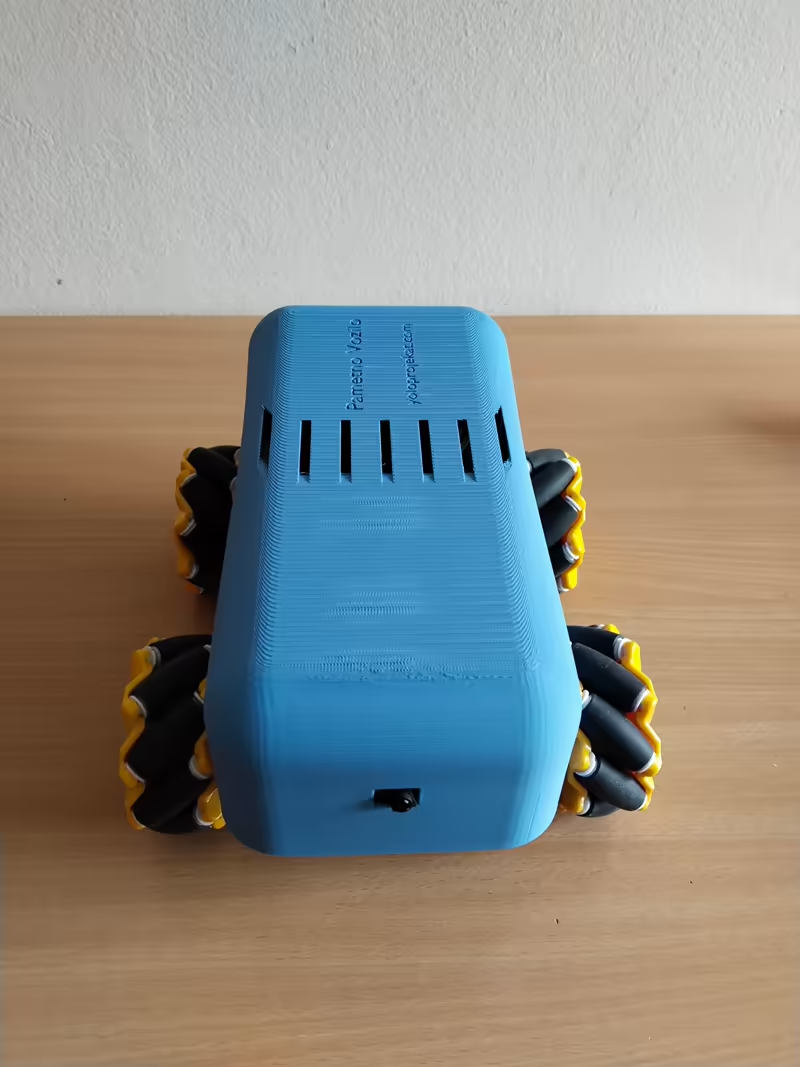
Smart Vehicle, originally Pametno Vozilo, grew from hands-on robotics work at ETŠ Nikola Tesla in Niš. I created the platform to connect what happens in a camera frame with software that can control a physical vehicle.
The project combines Raspberry Pi 5 edge computing with a Kotlin / Jetpack Compose Android control station. The code is open source under the MIT license. Predrag Šubarević mentors the project, with thanks to former mentor Dejan Batanjac.
The constraint: vision cannot own the whole system
The first prototype coupled vision and motor control. When inference became busy, control had to wait. That made separation of responsibilities a practical requirement.
Camera capture, model inference, video delivery, and motor commands have different jobs. They need to cooperate without making the operator wait for every frame to finish processing.
What I built
- Pi Camera v2 → capture
- Raspberry Pi 5 → YOLO
- Android → view & control
On the vehicle
A Raspberry Pi 5 with 8GB RAM runs Python services for GPIO peripherals, YOLO object detection, and MJPEG video streaming. Four DC geared motors with Mecanum wheels provide movement in multiple directions, driven through L298N H-bridge motor drivers. An XL4015 converter supplies regulated power.
In the operator’s hand
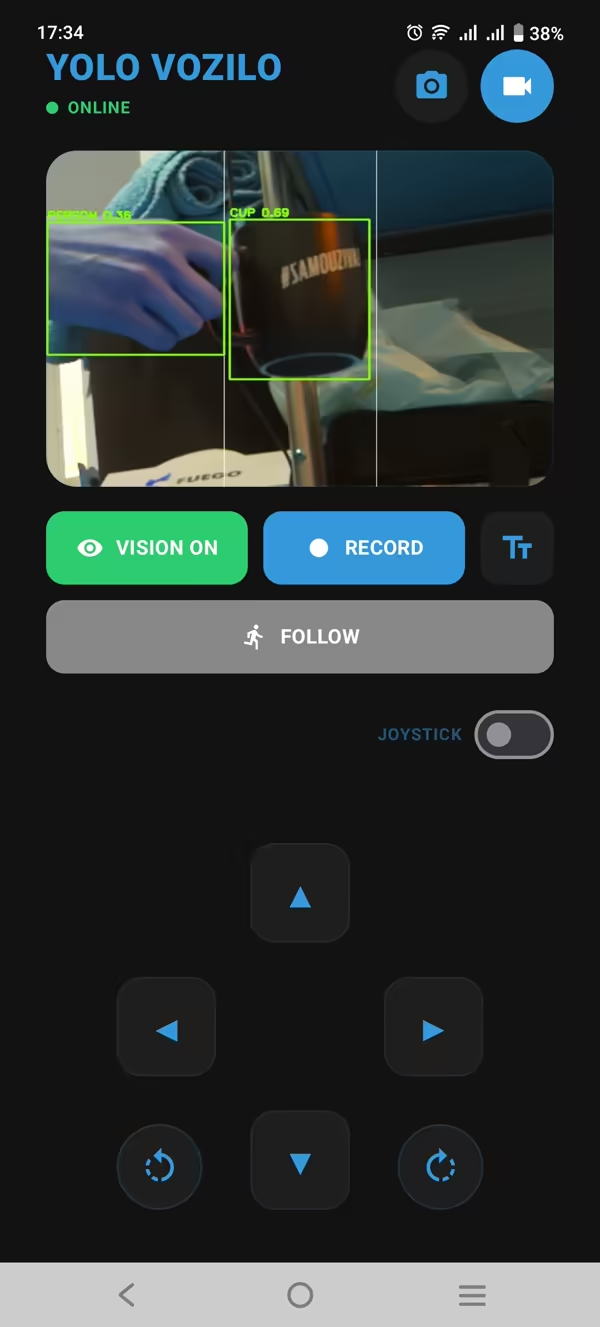
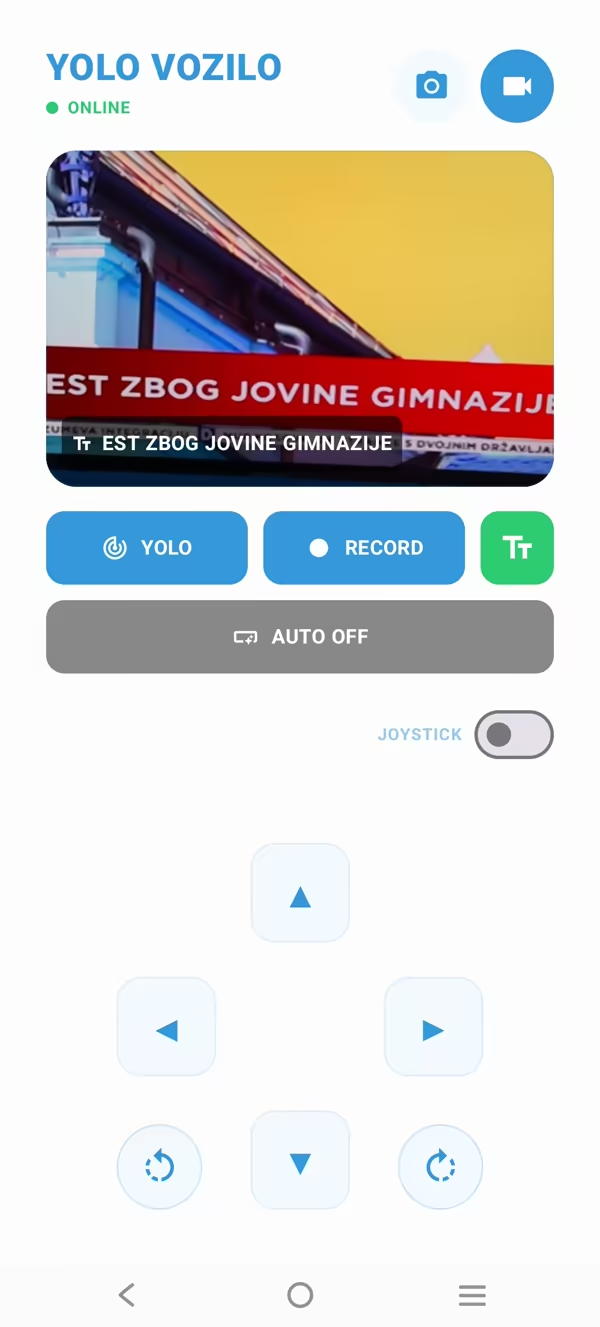
The native Android client brings live video, drive commands, and telemetry into one control station. YOLO detection happens on the Pi. Google ML Kit OCR runs in the Android client to extract text from the video.
When connectivity changes
Smart Network monitors the connection and brings up a local fallback hotspot when external Wi-Fi drops. Model Pipeline provides optimization, quantization, and export workflows for TFLite and ONNX models.
What the project demonstrates
The platform earned 4th place and a Special Award at the 10th Galaksija Cup. Its public evidence includes the vehicle, Android interface, hardware diagram, and open-source implementation.

The lesson is about system boundaries: separate the expensive work, make control usable, and plan for a dropped connection. Those same decisions matter in apps and connected services.
Teleoperation and on-device vision are the foundation. LiDAR and SLAM, accessible programming tools, and clearer replication guides are future directions, not shipped capabilities.
Explore the implementation
- Official Smart Vehicle project website
- Python Raspberry Pi server
- Kotlin / Jetpack Compose Android client
- Smart Network fallback service
- Model Pipeline
Planning an Android app or a connected system? Tell me what it should do and what hardware or services it must work with.
Discuss your project ↗